By Cde Honest Vhura Hombe
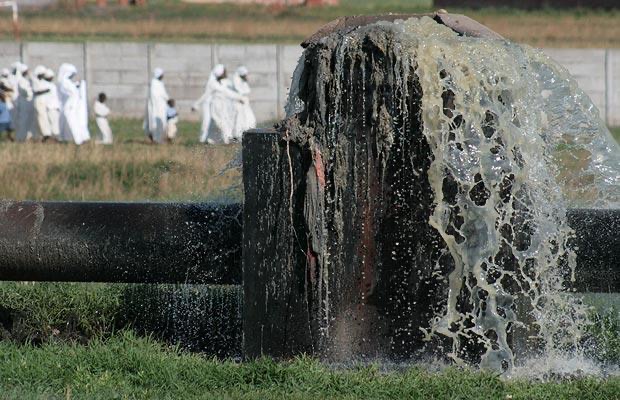
It never rains but pours in Zimbabwe, and in Mufakose it flows raw pungent sewage.
The suburb has now become a proud host to Zimbabwe’s newest national project: the Great Excrement Canal.
Mufakose, being one of Harare’s oldest high-density suburbs, is famous for its resilience, its chronic poverty, and now its unmistakable stench.
With at least 273 sewage overflows reported since 2023, the township is fast competing with Victoria Falls as a top tourist destination—except here, the spray comes with both a cholera and typhoid risk.
The suburb’s sections carry colourful names like Magandanga (loosely, “thugs”), which now seem prophetic.
One has to be a thug—or at least have the stamina of one—to survive wading through faeces on a daily basis.
By law, Harare City Council is supposed to handle waste management.
But, as residents point out, council workers have mastered the art of ghosting—appearing only in budget statements and never in the streets.
One exasperated resident, Mai Tino, lamented: “It has been over a week now, and no one from council has come to assist us.”
“We are now living in fear of contracting diseases.
“We have children here, and we do not know what to do,” she said.
John Moyo, another resident, added: “We are now prisoners in our own homes.”
“The sewage is everywhere, and the stench is too much.
“We are appealing for urgent help before we all get sick,” said Moyo.
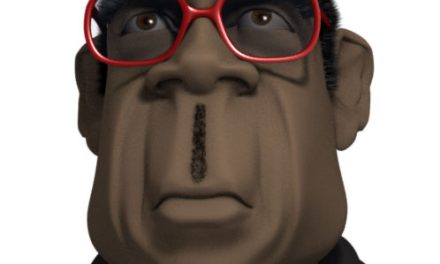
Unfortunately for Moyo, his cry for freedom may have to wait until 2030, when President ED finishes building the promised upper-middle-income septic tank society.
Meanwhile, the minister of local government D Daniel Garwe is too busy championing the ED 2030 term-limit extension to waste time on minor issues like the health risk posed by Mufakose’s sewage floods.
Residents have petitioned the Zimbabwe Human Rights Commission, citing the right to life, dignity, and an environment not laced with faecal matter.
But, as one local joked: “If the Constitution had a smell, maybe then someone in government would notice.”
The Combined Harare Residents Association chairperson, David Pasipanodya, blasted the City of Harare for gross human rights violations.
He called for repairs, mobile toilets, free medical services, and compensation.
In the meantime, locals improvise as the children have turned puddles of sewage into playgrounds, while entrepreneurs whisper of “Sewage Safari Tours”—the only place in the world where man and manure coexist in harmony.
Harare City Council spokesperson Stanley Gama, speaking with local sections of the media, defended council efforts, blaming residents for stuffing sand, diapers, and mysterious objects into sewer lines.
His solution was less littering, more patience, and, if possible, a stronger nose.
Yet Mufakose residents aren’t laughing.
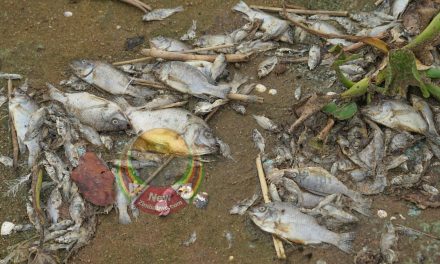
Families have abandoned homes, others remain trapped indoors, and everyone fears an outbreak of cholera or typhoid.
The suburb has become a living museum of state neglect, where “Leave No One Behind” has been rebranded as “Leave Nothing Dry.”
Mufakose once symbolised resilience.
Today, it symbolises what happens when leadership turns its back while residents wade forward—one foul-smelling step at a time.