By Cde Honest Vhura Hombe
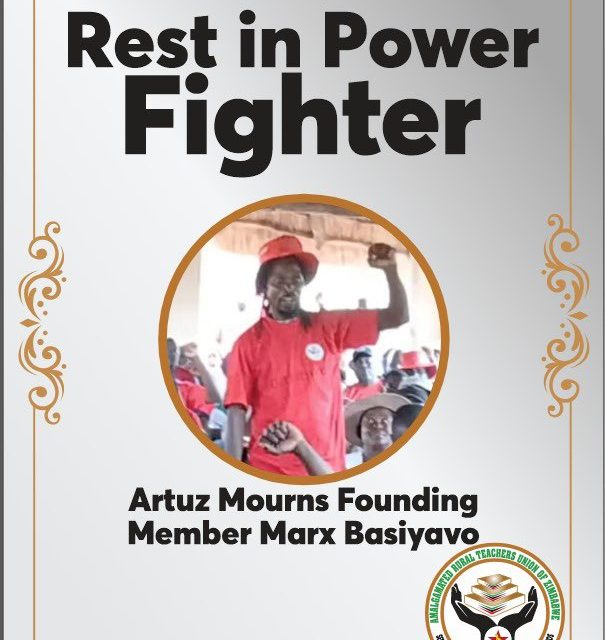
ZANU PF last week, in a development that left villagers rubbing their eyes and consulting both elders and spirits for clarification, blocked the burial of veteran teacher and trade unionist Cde Markswell “Marx” Basiyawo in his rural home of Ward 29, Mvurwi.
True Patriots, this development has once again proved that in the Second Republic persecution does not stop at death, it simply changes uniform.
The decision, led by ZANU PF councillor Manzou and his loyal choir of slogan-shouting supporters, denied Basiyawo burial next to his father’s grave, as if even ancestors now require party cards to host relatives.
What shocked villagers most was not the cruelty of the act, but the efficiency.
Roads remain cratered, clinics short of drugs and boreholes dry, yet when it comes to blocking a grave, the party machinery works like a Japanese engine.
Councillor Manzou, whose official mandate is service delivery, appears to have discovered a new portfolio under Vision 2030 — Ward Burial Officer.
In this new governance model, councillors no longer ask who needs clean water, but who deserves soil.
The unwritten policy is simple such that ZANU PF wards are for ZANU PF bones only.
Cde Basiyawo, a founding member of the Amalgamated Rural Teachers Union of Zimbabwe (ARTUZ), was officially declared unfit for burial in Ward 29, not because of witchcraft or murder, but because he committed the unforgivable sin of organising teachers.
In the twisted logic of the Second Republic, demanding better salaries is more dangerous than stealing public funds, and a chalk-stained activist is a bigger threat than a tender baron.
As punishment, Basiyawo was buried at Mvurwi cemetery against his expressed wishes, a final disciplinary hearing conducted after death, with no right of appeal.
Known affectionately as Cde Marx, Basiyawo had long been a thorn in the ruling party’s flesh, or as villagers put it, “a stone in the shoe that refuses to fall out.”
His crimes included recruiting teachers into ARTUZ, a union that the minister of primary and secondary education, Torerai Moyo, once accused of being an agent of regime change, as if underpaid teachers meeting under a tree are plotting coups instead of school fees.
For years, Basiyawo’s union work in Mashonaland Central earned him transfers, threats and charges so absurd they sounded like badly written Nollywood scripts.
At Nyakapupu Secondary School, Cde Marx successfully challenged attempts by the ministry to dismiss him on fabricated absenteeism charges, following what supporters describe as failed attempts on his life.
When that did not work, he was transferred to Angwa Primary School, where the state escalated matters and charged him with five counts of rape and, for dramatic balance, an additional charge of manufacturing a bomb.
The message was clear, if trade unionism will not silence you, criminal fiction will.
Eventually, Cde Marx had to be removed from Mashonaland Central altogether, not to save him, but to save the province from his dangerous ideas about dignity and labour rights.
In 2023, Basiyawo was dismissed from his teaching job for what authorities politely called misconduct and what teachers simply call telling the truth.
He spent 19 months away from the classroom he loved, only to be reinstated on 10 November this year, a small but symbolic victory against a system that punishes resistance more harshly than corruption.
It is this defiance, these minor wins against state power, that Cde Marx was forced to pay for even in death.
The denial of his burial in his rural home sent a chilling message to teachers and activists alike that in Zimbabwe, the state does not merely control your job, your voice and your movements, it also negotiates your grave.
Even death, it seems, must be politically correct.
As villagers whispered at the cemetery, “Ukafa wakashinga, unovigwa wakamira,” meaning if you die standing, they will still try to bury you kneeling.
Cde Marx may have been denied ancestral soil, but his story now rests firmly in the conscience of the living.
ZANU PF may control wards, councillors and cemeteries, but it has yet to discover how to discipline a legacy.
Farewell, Cde Marx.