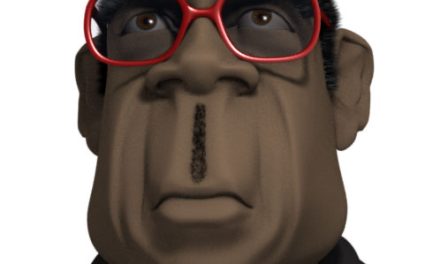
Fellow countrymen, ZANU PF compatriots and elites, it’s that time again, I rise from the grave to share my unparalleled political wisdom and insight.
I rise today not groaning in anger and bitterness alone, but with the unendurable sorrow of a father watching his own children auction the family inheritance while claiming to preserve the household.
My bones tremble in political disbelief.
For years, we resoundingly declared and established that the land reform was irreversible!
We celebrated and embraced that the rich and fertile soils of Zimbabwe have finally returned to their rightful owners, in the aftermath of decades of colonial theft, racial dispossession and, dare I say, the economic apartheid masquerading as civilisation.
The Second dispensation under my successor Ruka Chivende is infested with cosmetic revolutionaries who have forgotten the late father of Zimbabwe, Joshua Mqabuko Nyongolo Nkomo’s national mantra that “the land is the economy and the economy is the land.”
Ruka, Ruka, why have you and your lieutenants developed diplomatic amnesia?
A nation only thrives when it puts its people above selfish elite interests.
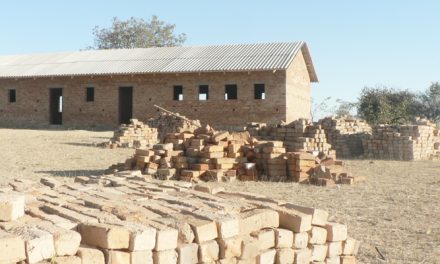
My people, I watched in disarray when 67 farms seized during the fast-track land reform programme are now being returned to foreign former owners under the polite language of “policy recalibration” and “international re-engagement.”
At this juncture, I must now ask ourselves: is this the much touted “Fourth Revolution?”
Apparently, this ill-conceived and ill-digested reversal was a necessary diplomatic appeasement to international lenders, to restore confidence, and unlock debt restructuring.
My people, why after 46 years of independence are we fixated on convincing Western capitals that our nation Zimbabwe has become a responsible tenant on the plantation of global finance?
At the expense of the indigenous Zimbabwean masses, how poetic.
My people, have we sunk so low that we have sold out what we won in the liberation struggle and its ideals for selfish neo-imperialist interests, for the mere sake of international approval?
Why not draw inspiration from Iran, tone grounded on indigenous ideological clarity that we are fighting for our existential survival?
Our way of life as Zimbabweans, despite our ethnic differences.
In all honesty, my people, what pains me most is not this so-called new “progressive” policy with the international community.
What really troubles me is the speed with which our liberation principles are tragically traded for debt negotiations, and economic applause from the same Western institutions that once celebrated our punishment.
In my 37-year reign, my people, our land was not merely property, it was our rightful inheritance born from the blood and sacrifice of our martyred heroes and heroines of the liberation struggle.
Today, I sadly observe and analyse how our ancestral inheritance and birthright, our land, is being returned to Western powers through mischievous paperwork.
My people, I honestly and sincerely regret not issuing out title deeds, forgive me for issuing 99-year leases.
One gentleman, by the name of Kudakwashe Tagwirei, has promised that title deeds would unlock billions in capital and empower indigenous farmers.
Sadly, before the ink could dry on the promise, the same land is now quietly returning to former owners while poor villagers face eviction from farms they occupied for more than two decades.
My people, this is not reform, it is none other than ideological pickpocketing.
The heartbreaking stories emerging from Samba Range in Chiredzi, where thousands of families settled during the land reform programme now face displacement under the sacred modern slogan called “investment.”
My people, this much touted “Investment”, I have noticed, is nothing but the Second Republic’s favourite deodorant.
It is over-sprayed until injustice begins to smell like development.
Black indigenous families who tilled the soil for 26 years are reportedly being told that the revolution expired with my burial.
“Baba venyu VaMugabe vakakupai minda vakafa.”
What a remarkable sentence.
The landless peasants who once danced for liberation are now discovering that revolutions can apparently be inherited by shareholders.
My people, the socialist soul of ZANU PF, forged in prisons, forests, and refugee camps, is now being slowly replaced by a luxury version of patriotism where comrades measure revolutionary commitment through farms, contracts, fuel allocations, and imported suits.
In our struggle, socialism meant empowering the masses.
Today, empowerment appears to mean introducing elites to larger pieces of land.
I also rise deeply disturbed by this growing obsession with Constitutional Amendment Bill No. 3 (CAB3).
This political creature shrouded in mystery is flaunted by the Second Republic as reform.
My people, constitutions are supposed to restrain power, not moisturise it.
Yet I observe with concern that CAB3 seeks to stretch presidential terms, lengthen parliamentary life spans, and dilute the sacred principle of one man, one vote through indirect presidential electoral mechanisms dressed in legal language sophisticated enough to confuse exhausted citizens.
A country where constitutional amendments now arrive more frequently than reliable electricity.
We are told these changes are for stability.
Stability, my compatriots, has become one of the most abused words in African politics. It often means ensuring citizens remain stable spectators while power remains permanently seated.
The liberation struggle was never fought so that constitutions could become adjustable furniture.
We fought colonialism because Africans demanded political agency, dignity, and direct democratic participation in the governance of their nation.
Now I watch former revolutionaries treating constitutions the same way wealthy men treat inconvenient village boundaries — something to redraw when ambition expands.
Even more fascinating is the silence surrounding these developments.
Some comrades whisper privately.
Others post cryptic messages involving Julius Malema, biblical allegories, and warnings about unelected businessmen who become more powerful than elected institutions.
Ah yes, Zimbabwean politics has once again entered its favourite season: coded panic.
Videos are shared.
My people, revolutions do not collapse only through invasion.
Sometimes they decay quietly through greed wrapped in patriotism.
The tragedy before us is not merely about land. Nor is it simply about constitutional amendments.
A nation that forgets why it fought soon begins negotiating against itself.
The poor peasants in Chiredzi, the displaced farmers in Seke, the unemployed youths watching politically connected elites accumulate land, and the ordinary citizens confused by endless constitutional engineering are all asking the same question:
“Who exactly inherited the revolution?”
Because if liberation becomes a private business venture for politically connected aristocrats, then the struggle has not been betrayed by outsiders.
It has been privatised from within.
My people, history is a patient judge.
It observes silently while politicians celebrate temporary victories, amend constitutions, redistribute slogans, and commercialise revolutions.
But eventually history asks one cruel question:
Did power liberate the people, or merely relocate privilege?
Until Next time, Asante Sana.