By Obert Masaraure
As schools prepare to reopen for the second term on 12 May 2026, a familiar anxiety is settling over many Zimbabwean households.
It is not the anticipation of a new academic term, but the financial strain associated with meeting school requirements, chief among them, the cost of uniforms.
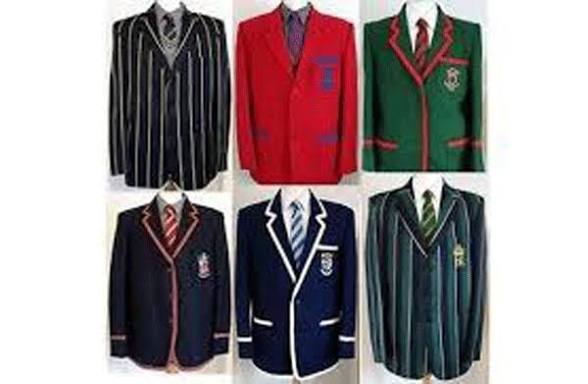
Framed by authorities as a matter of maintaining “standards,” the enforcement of prescribed uniforms has, in practice, become an exclusionary mechanism.
Estimates indicate that hundreds of thousands of learners risk being denied access to education due to the rising cost of approved attire, costs that, in some cases, exceed the monthly earnings of low-paid civil servants.
In a country still grappling with structural inequality, the uniform requirement increasingly functions less as a symbol of order and more as a barrier to entry.
This tension cannot be fully understood without situating it within the longer arc of Zimbabwe’s colonial history.
The modern education system, introduced under British colonial rule, was not designed as an emancipatory project.
Rather, it was structured to produce a disciplined African labour force, conditioned for administrative subservience and economic utility.
School uniforms formed part of that architecture, tools of regulation intended to standardise appearance, suppress cultural identity and inculcate obedience.
Decades after independence, many of these inherited norms remain intact.
While the political system has changed, aspects of the educational framework continue to reflect colonial logics, raising questions about the depth and trajectory of decolonisation in the sector.
One of the most persistent arguments in favour of uniforms is that they promote equality by masking visible differences in wealth.
Yet this assertion is increasingly difficult to sustain.
In practice, disparities remain evident, often through the condition, fit or age of the garments.
Rather than eliminating inequality, the uniform can accentuate it, placing additional pressure on low-income families to conform to standards they cannot afford.
Beyond the economic dimension lies a deeper philosophical question that “should education systems obscure or confront social realities?”
Critical pedagogy traditions, associated with thinkers such as Paulo Freire, argue that education should cultivate awareness of inequality rather than conceal it.
From this perspective, the insistence on uniformity risks dulling the critical consciousness necessary for meaningful social transformation.
The endurance of uniform culture can also be examined through the lens of social theory.
Antonio Gramsci’s concept of cultural hegemony suggests that dominant systems persist not only through coercion, but by embedding their values as “common sense.”
In this context, the belief that discipline and learning are inseparable from uniform dress may reflect a deeply internalised colonial inheritance.
Similarly, Michel Foucault’s analysis of institutions highlights how schools function as sites of discipline, producing what he termed “docile bodies,” individuals conditioned to conform to established norms.
The regulation of dress, in this reading, is not merely administrative but symbolic of broader systems of control over identity and expression.
In contemporary Zimbabwe, these dynamics intersect with broader questions about citizenship, participation and agency.
If schooling emphasises conformity over critical engagement, it may inadvertently shape a citizenry less inclined to question authority or challenge structural inequities.
The debate over uniforms, therefore, extends beyond attire; it touches on the kind of society the education system seeks to cultivate.
Policy responses to the issue have thus far oscillated between state regulation and market dependence.
On one hand, government mandates prescribe specific designs and suppliers; on the other, private retailers often dominate supply chains, driving up costs.
Both approaches have limitations, particularly in an economy characterised by volatility and income disparities.
An alternative pathway lies in reimagining education as both a site of learning and production.
Reviving and modernising models such as Education With Production (EWP) could enable schools to develop community-based textile initiatives.
Under such a framework, students would acquire practical skills in design and manufacturing while contributing to the production of affordable clothing for their communities.
This approach would not simply replace one form of uniformity with another, but would expand access, build local capacity and reduce dependence on external suppliers.
Crucially, the decolonisation of education must extend beyond curriculum reform to encompass everyday practices that shape learners’ experiences.
Dress codes, language policies and disciplinary systems all play a role in either reinforcing or dismantling inherited hierarchies.
As the new school term approaches, the debate over uniforms presents an opportunity for reflection.
The question is not only whether uniforms are affordable, but whether they remain appropriate in a system seeking to redefine itself in post-colonial terms.
Reform need not imply disorder.
Rather, it can open space for more inclusive, flexible and context-sensitive approaches, ones that recognise diversity, uphold dignity and place the learner at the centre of the educational project.
If Zimbabwe is to advance a genuinely decolonised education system, it must be willing to interrogate long-standing assumptions.
The school uniform, once a symbol of discipline and cohesion, may now require re-evaluation in light of contemporary realities and historical understanding.