By Cde Bekezela Mkonto KaMthwakazi
Zimbabwe’s romance with its “all-weather friends” from the East has officially entered the toxic relationship phase.
At first, it was all “ni hao” and shiny promises of development, but now, it’s all smoke, dust, gunfire and polluted rivers.
The Chinese came with shovels and ended up carrying guns — and somehow, our leaders are still smiling like brides at a lobola ceremony paid in US dollars.
Let’s start in Mutoko, that rugged corner of Mashonaland East where Quijun Yu, a security supervisor for China Zhuhe Mining, allegedly decided that “community relations” meant shooting a man dead.
The victim, Fungai Nhau, wasn’t armed — unless you count hunger and frustration as weapons.
It happened on 9 October 2025, and the police — to their rare credit — charged Yu with murder.
The community, meanwhile, is still waiting for justice and maybe a new borehole, since Zhuhe’s mining dust has long outlived its welcome.
But Yu isn’t the first Chinese national to think Zimbabwe is part of a Wild West franchise.
Back in Zhombe, on 26 May 2024, Cai Yulong turned a gold mine into a war zone when he opened fire during a shaft dispute, killing Goni Goni and injuring three others.
He was convicted, of course, but the mines kept mining, and the bullets kept flying.
Maybe the Environmental Management Agency (EMA) should rename itself the Emotional Management Agency — since all it does is issue fines that wouldn’t even buy a plate of sadza at Gweru Chicken Inn.
Speaking of Gweru, let’s rewind to June 2020, where Zhang Xueun, a mine boss at Reden Mine, allegedly shot two employees — Kenneth Tachiona and Wendy Chikwaira — during a wage dispute.
A classic case of “shoot first, process the payslip later.”
The workers were asking for their money; Zhang gave them lead instead.
One wonders if this is what our leaders mean when they say “strategic partnerships.”
By January 2025, in Filabusi, another Chinese national, Xu Guoqing, apparently decided that bullets were better than dialogue, shooting Mthandazo Sibanda, a 22-year-old prospector.
The man was accused of stealing gold dump material — or maybe just stealing oxygen on Chinese property. Xu was denied bail, but you can bet his mining license is still in good standing.
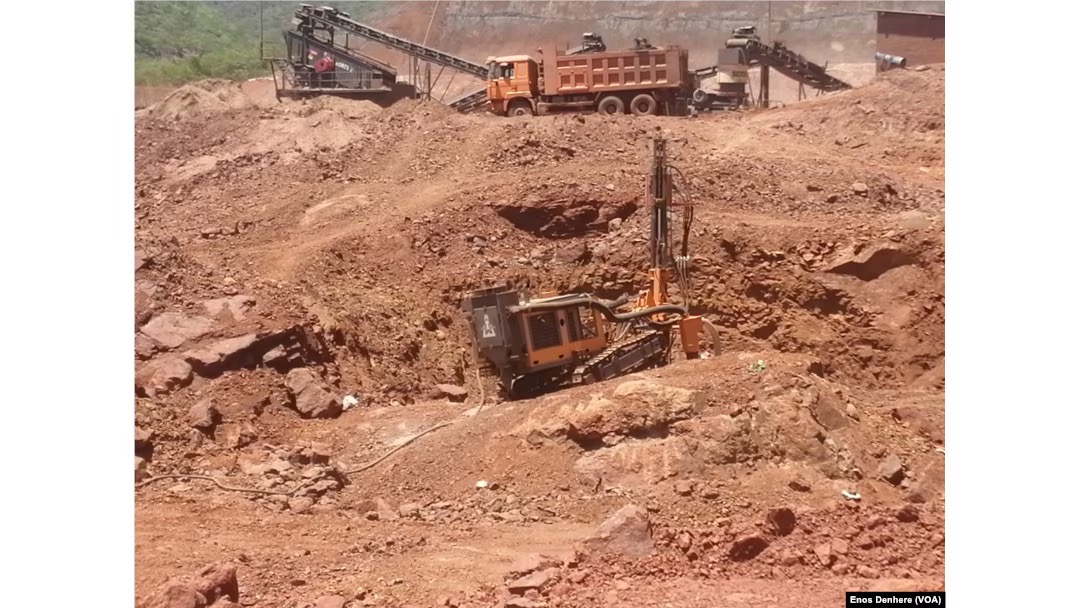
Then there’s Shurugwi, where the Chinese mining company Chengxi Pvt Ltd has turned the once scenic Boterekwa Falls into something resembling an apocalyptic soup.
The locals no longer fear thunderstorms — they fear Chengxi’s daily blasting schedule, which shakes their houses like prophets at an all-night prayer.
“Our walls are cracking, our ceilings falling,” cried Sylvia Moyo, 65, who now measures the day’s tremors the way others measure rainfall. Another resident, Emilda Moyo, says she “wakes up fearing for her life.” We don’t blame her — Chengxi guards once shot Emmanuel Geje dead in September 2024.
The company called him a “trespasser.” In China, that might fly. In Zimbabwe, it apparently still does.
Meanwhile, in Mutasa District, Sino Africa Huijin Holdings has been doing to the environment what termites do to a thatched roof — quietly, consistently, and with total impunity.
Between October and December 2024, villagers said the company’s blasting cracked their houses, scared off their livestock, and poisoned their streams.
“We are between a rock and a hard place,” said Ishewedenga Moyo, not realising that both the rock and the hard place now belong to the Chinese.
EMA suspended the mine twice, but it’s back in business — proof that in Zimbabwe, “temporary closure” is just the government’s way of saying, “Take a tea break, comrade.”
Further south in Bikita, the lithium lords at Sinomine Resource Group (Bikita Minerals) are digging fortunes for electric cars in Beijing while villagers in Murape walk four kilometres for clean water.
They built a slime dam that cut off entire communities.
One local, Fanuel Chahwahwa, sighed, “We lived peacefully before they came.” Another, Evelyn Mareke, reported fish dying and crops wilting after effluent flowed into the Matezva Dam.
EMA fined them — Level 14, the highest possible fine — which in Zimbabwean terms translates to roughly “half a goat and a handshake.”
And yet, our government calls these investors “partners.”
Partners in what, exactly, pollution, poverty and premature funerals, True Patriots.
The pattern is clear — the Chinese dig, the locals suffer, and the authorities pose for photos in new suits bought with “investment facilitation fees.”
Villagers film cracked walls, brown water, and men in hard hats behaving like warlords.
On Reddit, someone quipped, “We didn’t know ‘Belt and Road Initiative’ meant belts for us and roads for them.”
Let’s face it: the “dragon” has not only landed — it has dug, shot, and polluted.
Our mountains are being eaten, our rivers are being poisoned, and our people are being buried beneath both dust and silence.
But as the proverb goes, chara chimwe hachitswanyi inda — one finger cannot crush a louse.
Zimbabweans must use all five — solidarity, outrage, memory, resistance, and law — to squeeze out this foreign infestation and the domestic sellouts who feed it.
Until then, we’ll keep attending funerals for villagers and meetings for “stakeholders.” One group buried underground, the other buried in brown envelopes.