By Cde Nhamo Taneta
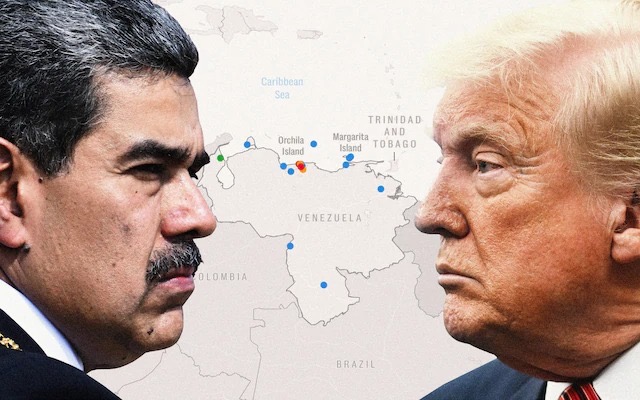
Recently, the world rubbed its eyes in disbelief as U.S. President Donald Trump, still basking in the afterglow of his much-mocked “peace award” credentials, announced that American forces had captured Venezuelan President Nicolás Maduro and his wife, Cilia Flores.
The pair were promptly exported to the United States like contraband, except this time the packaging read freedom.
Oozing pride like a victorious reality-TV host after firing a contestant, Trump quickly abandoned the tired “war on drugs” script and revealed the real plot twist was that the United States would now take over Venezuela’s oil industry, for the good of the Venezuelan people, the American people, Wall Street, and anyone else holding a drilling permit.
Trump in his self righteous pompous speech
explained that American companies would manage Venezuela’s oil “temporarily,” until democracy matures, a process that, historically speaking, tends to last exactly as long as the oil does.
Like a colonial governor with a Twitter account, the self-anointed Bishop of Democracy assured the world that only Americans possess the moral and managerial competence to run Venezuela properly.
Venezuelans, apparently, have been trying and failing all this time simply because they forgot to invite ExxonMobil.
International law was briefly spotted gasping for air somewhere in the background.
The United Nations, that toothless bulldog of global diplomacy, always barking rhetoric, appeasing speeches, and resolutions, was once again reminded that when American interests are involved, sovereignty becomes more of a polite suggestion.
Small nations like Venezuela, it turns out, have rights, just not the mineral kind.
Oil-rich countries, history reminds us, are routinely introduced to democracy at gunpoint.
Iraq was liberated of stability.
Libya was freed from infrastructure.
Afghanistan was gifted two decades of chaos.
Venezuela, it seems, has now joined the exclusive club where elections are illegitimate unless Washington approves the winner.
Fresh from his peace-branding exercise, Trump demonstrated precisely why he “deserved” the accolade by violently removing the head of a sovereign state and shipping him off to a U.S. courtroom.
There, far away from Venezuelan soil, Maduro and his wife will face trial under American law — for crimes that can be loosely translated as failing to allow the United States to loot Venezuelan oil politely.
To ensure fairness, the same country that invaded now gets to prosecute.
The United States is indeed the judge, jury, jailer, and beneficiary; with such a system, democracy has no doubt never been so efficient.
Globally, reactions ranged from alarm to outright condemnation.
Several Latin American governments warned that kidnapping presidents sets a dangerous precedent, while Russia and China denounced the operation as imperial overreach.
Even Washington advised its own citizens to flee Venezuela, suggesting that the export of democracy may involve some assembly-required violence.
South African President Cyril Ramaphosa has openly condemned the U.S. action as a violation of international law.
Zimbabwe’s ruling ZANU-PF, however, opted for revolutionary silence.
Cde Ruka Chivende uttered not a word — perhaps too busy holidaying, perhaps drafting speeches about sovereignty for future use, or perhaps plotting the ever-elastic 2030 agenda.
In the end, Trump’s message was refreshingly honest.
No pretence of humanitarian concern, no elaborate moral justifications — just oil, power, and the unwavering belief that democracy works best when delivered by missiles and managed from abroad.
Venezuela has been saved.
The bill, as always, will be paid by Venezuelans.