By Cde Patriot Sunungura
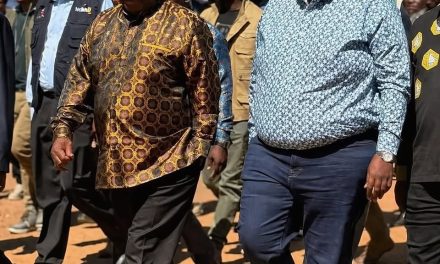
Within ZANU PF, our beloved ruling party, there are ordinary party members, there are chefs, and then there are Zvigananda.
True patriots, Zvigananda are powerful elites who rose through access to state tenders, public contracts and patronage networks, and who now leverage that accumulated wealth to capture party structures, influence internal processes and shape political outcomes.
Manicaland, our beautiful province, has now become the latest battleground for a clash of two Zvigananda.
Kudakwashe Tagwirei and Paul “Temptor” Tungwarara are circling each other with polite smiles, heavy wallets and clenched political teeth.
Officially, the drama is about procedure in the aftermath of Tungwarara’s co-option into ZANU PF’s Central Committee, later nullified by the party’s National Commissar, Munyaradzi Machacha, who, by the way, is on Tagwirei’s payroll.
Unofficially, it is about power, money and who gets to sit closest to the fire when succession sadza is finally served.
On one side is Tungwarara, now freshly endorsed by ZANU PF Manicaland structures, buoyed by boreholes, solar panels and housing schemes that have turned him into a walking development roadshow.
On the other is Tagwirei, the businessman-turned-political-financier whose name now appears in ZANU PF conversations the way salt appears in relish — even when you didn’t put it there yourself.
Both men deny wrongdoing.
Both camps swear allegiance to party rules.
Yet somehow, every time a rule is quoted, a receipt is whispered about.
Manicaland’s endorsement of Tungwarara was supposed to be simple, a vacancy, a nomination, a ratification.
Instead, it triggered a letter, then a counter-letter, then statements from Tafadzwa “Two Boy” Mugwadi, so politically philosophical with ideological rhetoric and the discourse of loyalties.
Mugwadi went on to throw a subtle jab at Tungwarara, labelling him a Mafikizolo who was politically and ideologically bankrupt.
Ironically, at the heart of this clash, which has even roped in the likes of Temba Mliswa and Jones Musara, there is a paradox that money is not allowed to buy influence — unless it already has.
Vote-buying is condemned loudly, but development handouts are praised warmly.
One man’s bribery is another man’s empowerment programme.
Tagwirei’s critics say he has mastered the art of structural shopping — acquiring loyalty not through ideology but through logistics.
Vehicles arrive, fuel appears, meetings are catered, and suddenly democracy feels very comfortable.
His supporters counter that this is not capture; it is capacity-building.
After all, how can a party mobilise without tyres, tents and a little “transport refund”?
Tungwarara, for his part, is accused of using the same playbook, only with better timing and provincial accents.
His supporters insist he simply outperformed his rivals at their own game.
“If munhu akakukunda achishandisa mari yake, mhosva ndeyako,” joked one youth member — if someone beats you using his own money, the problem is yours.
Yet this is not just a personality clash.
It is a mirror held up to ZANU PF itself.
A party born out of sacrifice now finds itself refereeing millionaires arguing over who paid for the whistle.
Provincial structures complain of Harare interference, while Harare insists it is merely enforcing order.
Everyone claims to be defending the constitution — the same constitution that bends like green mealie under enough pressure.
Importantly, both Tagwirei and Tungwarara represent a new political currency: access.
One brings access to capital, the other access to state programmes.
In a party where ideology retired years ago, access is king.
Whichever zvigananda controls the river controls the fish.
Still, it would be lazy to paint one as villain and the other as saint.
Tagwirei’s financial muscle has undeniably stabilised party operations in places where slogans alone could not.
Tungwarara’s programmes have delivered tangible benefits to communities long promised heaven but given dust.
The problem is not that money is present — it is that it now votes.
As the Politburo sharpens its knives — sorry, procedures — the real question is not who wins this round.
It is what kind of party emerges when leadership contests resemble tender processes, and loyalty is measured in convoys rather than convictions.
When zvigananda fight, the river does not ask who is right.
It only floods.