By Sports Reporter
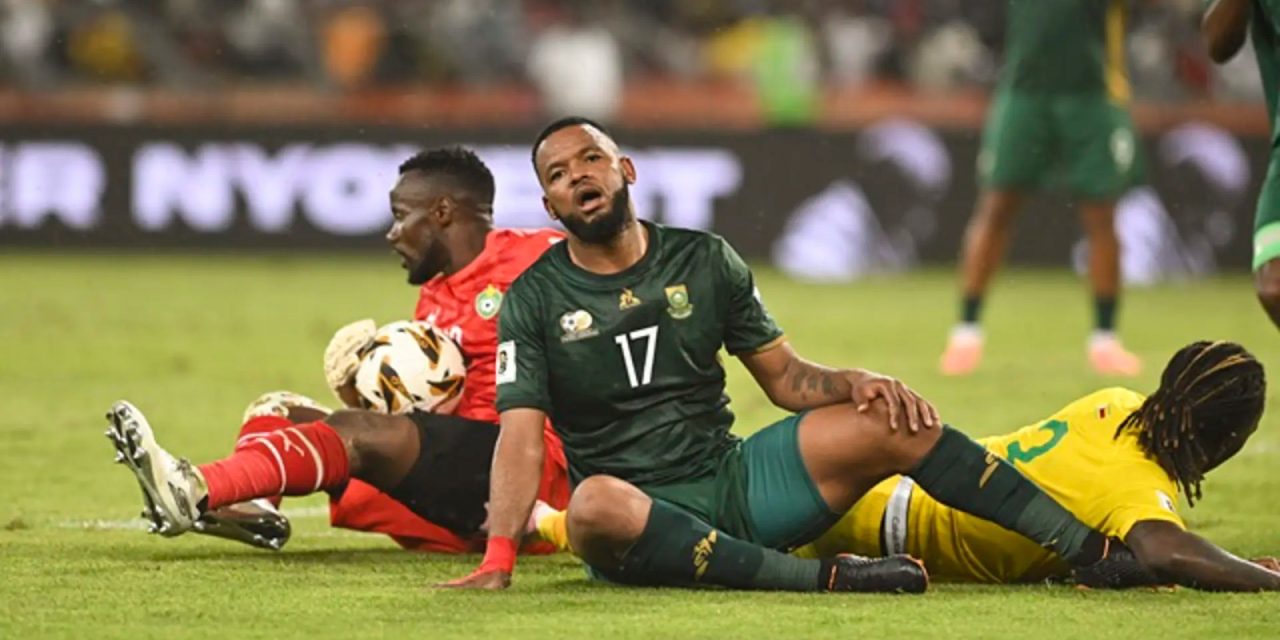
DURBAN –It was a night of brotherly love, missed chances, and mutual poverty at the Moses Mabhida Stadium, as Zimbabwe and South Africa drew 0–0 — a scoreline that perfectly summed up southern Africa’s economic performance: lots of effort, little return.
Zimbabwe, already mathematically eliminated from World Cup qualification — much like it has been eliminated from the world economy — arrived in Durban with one mission: not to lose too badly.
And they didn’t.
In fact, they achieved something rare these days — parity with their richer, load-shedding neighbour.
South Africa, meanwhile, needed a win to keep their World Cup dreams alive, but their finishing was as unreliable as Eskom’s power supply.
Despite dominating possession like a regional superpower, Bafana Bafana couldn’t find the net, proving that even with more resources, you can still fumble the bag.
Zimbabwe’s goalkeeper Washington Arubi was the star of the night — a one-man Reserve Bank defending the nation’s dignity with every save. Inflation may have devalued the dollar, but Arubi’s reflexes held strong.
Each block was a metaphor for resilience in the face of economic meltdown.
Then came the inevitable red card for Zimbabwe’s captain, Knowledge Musona — sent off for a “late challenge,” just as his country was sent off from the list of viable economies long ago.
Still, the Warriors fought on with ten men, defending like civil servants waiting for their salaries — patient, desperate, and slightly disbelieving.
South Africa’s Mbekezeli Mbokazi soon followed him off, restoring the numbers — a diplomatic gesture of equality between neighbours used to balancing hardship.
In the stands, fans from both sides sang together, not so much in rivalry as in shared catharsis.
Our Zim supporters chanted for glory, the South Africans for power — electric and political.
The result was a harmony of disillusionment so powerful it could have lit Johannesburg for a full hour.
At full time, both teams hugged it out — a symbolic trade deal between two economies that can’t afford to trade.
“Brotherhood,” commentators called it. “Broke-therhood,” others whispered.
Benin and Nigeria may decide the group’s fate next week, but in Durban, something deeper was decided — that in southern Africa, even when we don’t win, we still find a way to celebrate survival.
The match ended without goals, but with meaning: when you can’t conquer the world, at least draw with your neighbour and call it regional cooperation.