
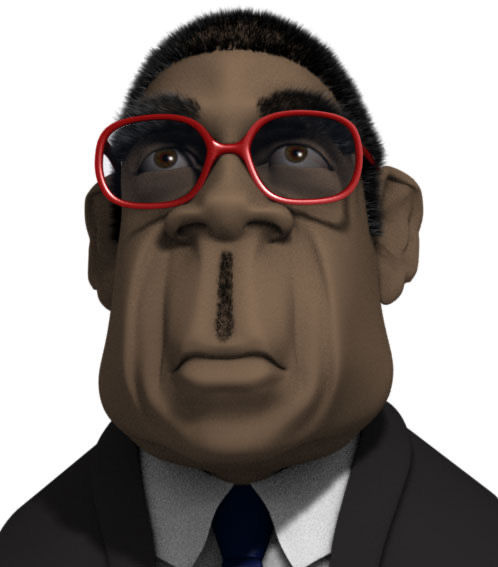
Fellow countrymen, ZANU PF compatriots and elites, I bring you compliments of the season — yes, even from beyond the grave.
Merry Christmas, Happy Holidays, and revolutionary goodwill to you all.
Death has not dulled my interest in Zimbabwean affairs; if anything, it has improved my eyesight.
From the grave, lies glow brighter and hypocrisy smells stronger.
My people, I rose this week not because of the heat — graves are cooler than Cabinet meetings — but because National Unity Day was celebrated again with speeches, handshakes and carefully rehearsed amnesia. ZBC smiled.
The Herald nodded.
Elites clinked glasses, and history was told to sit quietly at the back.
Unity Day, my children, was never meant to be a fashion parade of slogans.
It marked the end of Gukurahundi, a dark chapter I regrettably engineered, during which, according to the Catholic Commission for Justice and Peace, over 20,000 Ndebele-speaking Zimbabweans in Matebeleland and the Midlands were killed.
Not by drought, not by fate but by the state.
For politics, language and fear that I would lose my power, you know how I loved power.
Today, that blood is rinsed away with the word “unity,” as if a slogan can disinfect mass graves.
The handshake I shared with Joshua “Father Zimbabwe” Nkomo in 1987 has, over the years, been paraded annually as healing, yet the people of Matebeleland still wait, for justice, development, and truth.
From beyond the grave, I apologize for my wrongful actions and hope that one day you my people will find one another and build national social cohesion that is not rooted in ethnicity, race, or social class, but in shared national identity.
Unity without reckoning is not unity; it is silence dressed in national colours.
Under the Second Republic, Unity Day has become a hollow ritual, a political incense burned to keep ghosts calm.
Healing was replaced by elite convenience.
Power was preserved, not repaired.
Even from the grave, I can tell you this that the wounds ignored do not heal, they rot politely.
Now, my people, let us leave the shrines of unity and enter the digital police station.
I watched with amusement as the Zimbabwe Republic Police summoned Dr. David Nhunzva over AI-generated videos. Ah, technology — the only thing advancing faster than accountability.
In these videos, police officers do push-ups, jumping jacks, and allegedly hand over bribes. Satire, they cried?
No. Criminality, they declared — citing the Cyber and Data Protection Act.
Yet I scratched my skull and wondered cautiously when did consistency die? Because Passion Java once used AI to portray himself chasing criminals at Trabablas while police vanished like service delivery promises — and nothing happened.
No CID visit, no stern statements and definitely no sudden love for digital law.
So I ask, from six feet under that is AI illegal, or is ridicule illegal only when it lands too close to the truth? Is satire a crime, or is embarrassment the real offence?
In Zimbabwe, laws are elastic — they stretch depending on who is laughing and who is sweating.
Regulating AI is sensible, yes.
But selective enforcement is not regulation; it is persecution with WiFi.
When law chooses favourites, justice logs out.
Now let me turn my bony finger to another comedy — patriotism by radio poll.
ZANU PF activists recently combusted online after Fadzayi Mahere was voted “Zimbabwean of the Year” by listeners on ZiFM.
A poll, simple social media poll and no ballot boxes.
No soldiers, ZEC or the police just citizens and opinions.
And yet, panic spread like fuel queues before elections.
Mahere spoke calmly — about competence, accountability, ethical leadership.
Ordinary words.
Dangerous words.
Suddenly trolls declared radio stations “unpatriotic,” presenters “hostile elements,” and citizens “confused.”
One even suggested a forensic audit of a popularity contest. Ah yes, when you fear the people’s voice, even a poll becomes a coup.
My people, a ruling party terrified of a radio vote is not strong — it is insecure. When patriotism is defined as agreement, and treason as applause for the wrong person, the problem is not the airwaves; it is the leadership.
What united these three stories — Unity Day without justice, AI laws without consistency, and patriotism without the people — is one truth: power in Zimbabwe prefers control over conscience. Rituals over reform. Silence over substance.
But remember this lesson I learned too late and now preach too freely that the truth does not need permission.
It waits. It whispers. Then it returns loudly.
Until next time, Asante Sana.


