
By Cde Honest Vhura Hombe
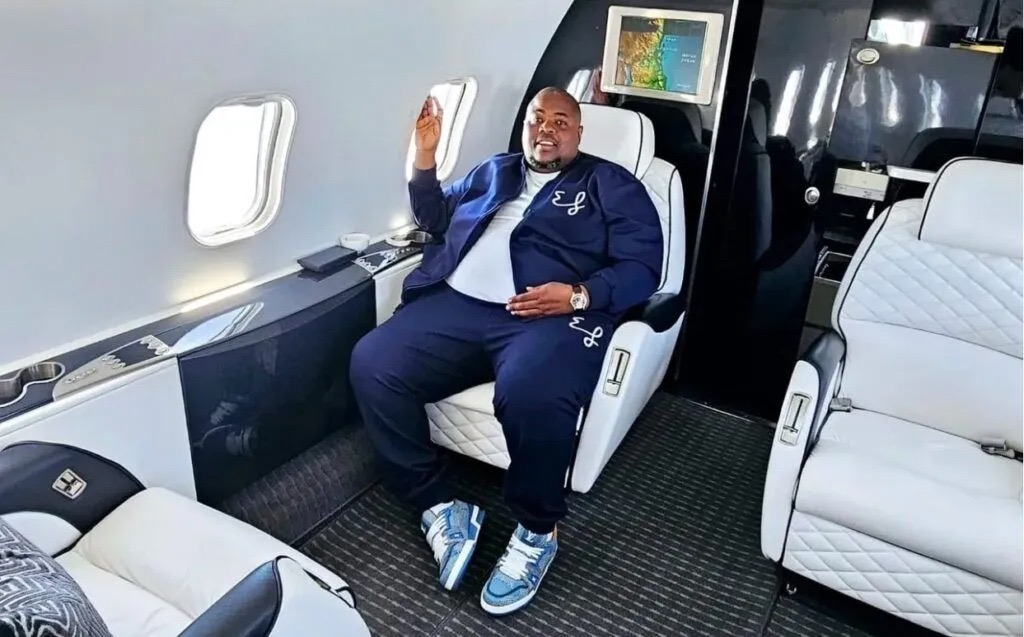
Tenderprenuer par excellence Wicknell Chivayo has acquired a US$34 million Gulfstream G550 private jet, a purchase that glaringly contrasts with the chronic failures of flagship public infrastructure projects tied to his name.
This acquisition True Patriots, has reignited public debate over the country’s tender system, elite patronage, and the curious tendency for abandoned projects on the ground to coexist with luxury at 41,000 feet.
Chivayo, whose wealth is closely associated with a web of lucrative state-linked contracts, announced the purchase with characteristic bravado on social media, disclosing the eye-watering price tag with the restraint of a man who believes humility is best expressed in capital letters.
The aircraft has since been jokingly described by critics as the most reliable energy project linked to his name — fully operational, fully funded, and delivered on time.
The jet’s arrival inevitably resurrected memories of the Gwanda Solar Project, a US$183 million tender awarded to Chivayo’s company, Intratrek, to construct a 100-megawatt solar power plant.
More than a decade later, the project remains notable not for the electricity it generates, but for its remarkable commitment to remaining theoretical.
The site itself stands largely unchanged — a vast, sun-drenched monument to unmet deadlines and contractual creativity.
Intratrek reportedly received between US$5 million and US$7 million in advance payments from the Zimbabwe Power Company despite the absence of a mandatory bank guarantee — a procedural detail ordinarily treated as non-negotiable for lesser mortals.
The payment left officials, auditors, and ordinary citizens united in confusion, briefly achieving national cohesion where policy had failed.
No solar panels materialised.
No megawatts entered the grid.
What did flourish, however, were legal arguments.
In a plot twist that would embarrass even a soap opera writer, the courts later upheld the validity of the contract, with some rulings suggesting Chivayo could even pursue damages on the basis that the state had mishandled the agreement.
The sun, it seemed, was shining exclusively in one direction.
Buoyed by these victories, Chivayo has emerged as a leading symbol of conspicuous consumption under the Second Republic.
A man whose lifestyle has expanded in direct proportion to the contraction of public services.
His collection of luxury vehicles, designer footwear priced above a teacher’s annual salary, and carefully curated social media philanthropy now form an unofficial syllabus in patronage economics.
On the other Zimbabwean teachers earn roughly US$350 per month before tax, a figure steadily eroded by austerity measures under Finance Minister Mthuli Ncube.
Tasked with educating future generations, many are instead perfecting mental arithmetic to calculate survival costs, discovering that the national curriculum offers no chapter on living with dignity.
Critics argue that Chivayo’s success is less a story of entrepreneurial brilliance than of proximity to power.
In this model, credibility is optional, delivery is negotiable, and failure is merely a prelude to renegotiation.
What matters is access — to ministers, contracts, and a legal system flexible enough to turn delays into entitlements.
The aircraft, unlike the Gwanda project, is expected to achieve full operational capacity without delay.
As for Zimbabwe’s renewable energy ambitions, the sun continues to rise faithfully each morning, illuminating empty project sites, underpowered communities, and a political economy where some soar effortlessly above the clouds while the rest remain grounded — still waiting for the lights to come on.


